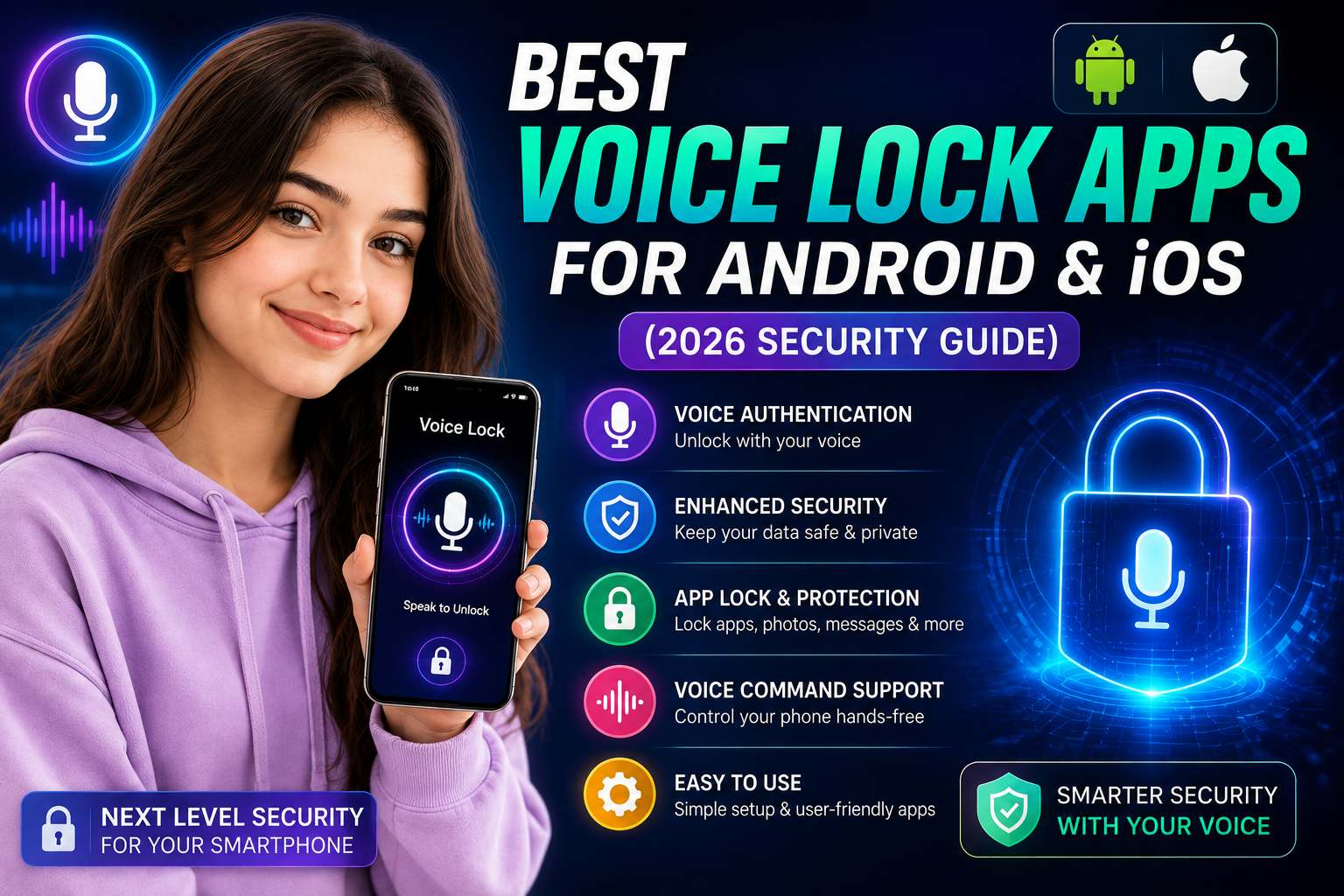
Introduction
Smartphone security has become more important than ever in 2026. With personal photos, banking apps, social media accounts, and private documents stored on mobile devices, users are constantly looking for new ways to protect their smartphones.
Among the many security options available today, Voice Lock Apps have gained popularity because they offer a unique and convenient way to secure a device. Instead of using a traditional PIN, pattern, or fingerprint, some voice lock applications allow users to unlock specific features through voice-based authentication or voice commands.
In this guide, we’ll explore how voice lock apps work, their advantages, limitations, security considerations, and what users should know before installing them on Android or iOS devices.
What Is a Voice Lock App?
A Voice Lock App is a mobile application that uses voice recognition technology to verify a user’s voice before granting access to certain functions or protected content.
These apps may use:
- Voice recognition
- Voice commands
- Speech authentication
- AI-powered voice matching
- Voice-based security features
The goal is to add an additional layer of convenience and personalization to smartphone security.
How Voice Lock Technology Works
Voice lock systems analyze specific characteristics of a person’s voice.
These may include:
- Pitch
- Tone
- Speaking style
- Vocal patterns
- Speech characteristics
When a user speaks a registered phrase, the app compares the voice sample with previously stored voice data.
If the voice matches, access may be granted depending on the app’s functionality.
Android vs iPhone Voice Security Features
Android Devices
Android offers extensive customization options, allowing developers to create various voice-based security and personalization applications.
Common Android features include:
- Voice assistant integration
- Voice command support
- App locking features
- Smart device controls
Android users typically have access to a wider range of voice-related customization apps.
iPhone Devices
iOS focuses heavily on privacy and security.
Apple devices provide:
- Face ID
- Touch ID
- Voice assistant functionality
- Privacy-focused authentication systems
Voice-related security apps on iOS generally operate within Apple’s security framework and permissions model.
Popular Features Found in Voice Lock Apps
1. Voice-Based App Locking
Some apps allow users to protect selected applications using voice verification.
Examples include:
- Messaging apps
- Photo galleries
- Notes applications
- Personal files
This can provide additional privacy for sensitive content.
2. Voice Command Unlock Actions
Certain applications support custom voice commands for launching specific actions.
Users may:
- Open applications
- Trigger shortcuts
- Access customized functions
The exact capabilities vary depending on the app and operating system.
3. Personalized Security Experience
Voice lock apps offer a unique alternative to traditional authentication methods.
Benefits include:
- Custom voice phrases
- Personalized unlock methods
- Modern user experience
- Enhanced accessibility options
4. Lock Screen Customization
Many voice lock applications also include visual customization features.
These may include:
- Voice-themed lock screens
- Animated security screens
- Premium wallpapers
- Personalized interface elements
Benefits of Voice Lock Apps
Convenient Access
Voice commands can provide quick access to selected functions.
Unique Authentication Method
Voice verification offers a personalized security experience.
Accessibility Support
Voice controls may help users who prefer hands-free interaction.
Modern Technology Appeal
Many users enjoy experimenting with advanced smartphone features and AI-powered tools.
Limitations of Voice Lock Apps
Although voice lock apps can be useful, users should understand their limitations.
Background Noise
Loud environments may affect voice recognition accuracy.
Voice Changes
Illness, fatigue, or microphone quality can sometimes impact recognition performance.
Security Differences
Voice-based authentication may not always provide the same level of protection as advanced biometric systems such as fingerprint sensors or facial recognition.
Device Compatibility
Features can vary depending on hardware, operating system version, and app capabilities.
Are Voice Lock Apps Safe?
Safety depends largely on the quality and reputation of the application.
Before installing any voice lock app:
Download From Trusted Sources
Use official app stores whenever possible.
Read Reviews
Check user feedback and ratings.
Review Permissions
Understand what permissions the app requests.
Keep Apps Updated
Updates often improve security and performance.
Avoid Unknown Developers
Choose reputable developers with positive track records.
Voice Lock vs Fingerprint Lock
| Feature | Voice Lock | Fingerprint Lock |
|---|---|---|
| Convenience | High | High |
| Personalization | Excellent | Limited |
| Speed | Good | Very Fast |
| Hardware Requirement | Usually None | Requires Sensor |
| Security Level | Moderate | High |
| Customization | High | Low |
Both options have advantages depending on user preferences and device capabilities.
Best Practices for Mobile Security
Even if you use a voice lock app, security experts recommend combining multiple protection methods.
Recommended practices include:
- Use a strong PIN or password.
- Enable fingerprint or face authentication if available.
- Keep device software updated.
- Install apps only from trusted sources.
- Enable two-factor authentication on important accounts.
- Avoid sharing security credentials.
A layered security approach generally provides better protection than relying on a single method.
Common Myths About Voice Lock Apps
Myth: Voice Lock Can Replace All Security Methods
Reality: Voice-based authentication is often best used alongside other security measures.
Myth: Every Voice Lock App Uses Advanced AI
Reality: Features vary significantly between applications.
Myth: Voice Authentication Is Always More Secure
Reality: Security depends on implementation, device hardware, and the specific application being used.
Frequently Asked Questions
Do Voice Lock Apps Work on Android?
Yes. Many Android devices support voice-related security and customization applications.
Can Voice Lock Apps Be Used on iPhones?
Some voice-based security applications are available for iOS, though functionality may differ due to platform restrictions.
Do Voice Lock Apps Require Internet Access?
Requirements vary by application. Some features may work offline, while others require online services.
Are Voice Lock Apps Better Than Fingerprint Locks?
Fingerprint authentication generally provides stronger biometric security, while voice lock apps offer additional convenience and personalization.
Can Voice Lock Apps Protect Individual Applications?
Some applications provide app-specific locking features depending on device compatibility and permissions.
Display Fingerprint for Any Android – Very Easy Guide (2026)